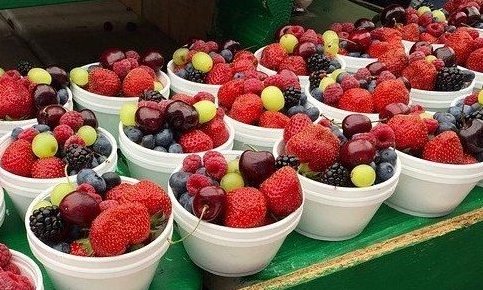
What we all know as antioxidants, or more recently referred to as bioactive compounds or phytochemicals, are natural—or sometimes artificial—substances that prevent oxidative damage to our bodies caused by free radicals, thereby providing us with a wide range of benefits. They occur naturally in vegetables and fruit, and particularly in red fruits (both berries and drupes), which have become world-famous and a staple of our diet thanks to their extremely high concentrations of these antioxidants.
Although our body produces certain antioxidants (endogenous ones), the contribution provided by berries is exceptional in boosting antioxidant levels and thus effectively eliminating or neutralising free radicals in our body.
Antioxidants or phytochemicals can be classified in various ways: by food source, by biological function, or by type, which is the most common method (see table below).
In the specific case of berries, these have a high concentration of a group of antioxidants called phenolic compounds. Within this group, anthocyanins are the best known, being responsible for the colour of fruits such as blueberries, raspberries or redcurrants.
Also known for their high antioxidant power are gallic acid and coumaric acid, as well as other equally important antioxidants such as quercetin (flavonols), resveratrol (stilbenes) and proanthocyanidins (flavanols). All of these are extremely potent antioxidants with anti-inflammatory, anti-carcinogenic, anti-mutagenic and antimicrobial properties, which provide us with a host of health benefits such as the prevention of cardiovascular and neurodegenerative diseases, the inhibition of cancer cell proliferation, diabetes management, the preservation of eyesight and skin health, etc., and we invite you to discover more about them in our blog.
If you don’t yet eat berries on a regular basis, at Arándanos el Cierrón we make it very easy for you with our mature plants for immediate harvests or our organic blueberries from Agriculture 4.0, which travel from the field to your table in under 24 hours.
Prepared and written by Adrián García Villar, Agricultural Engineer from the Polytechnic University of Madrid (UPM). Membership No. 215, Official Association of Agricultural Engineers of the Principality of Asturias (COIASTUR).
Bibliography:
Juan Carlos García, Guillermo García González de Lena, Marta Ciordia Ara, (2018).
Blueberry cultivation in Northern Spain, SERIDA.
National Cancer Institute.
Antioxidants and Cancer Prevention, 2017
(Table attached): Q.F.B. Martha Laura Cervantes Ceja (2009).
V. Lobo, Patil, A., Phatak, A., and Chandra, N.