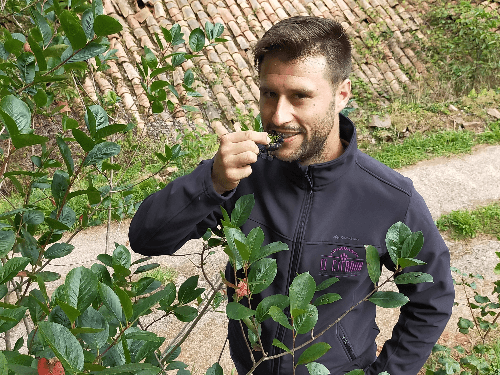
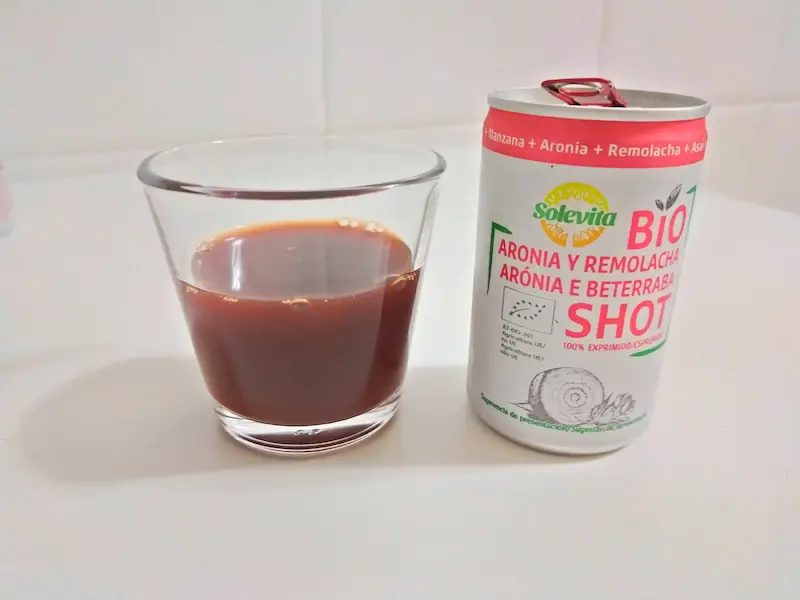
Aronia berries can be eaten fresh like any other red berry, but due to their bitter and astringent taste, they are mainly consumed in processed forms such as juices, smoothies, jams, jellies, mixed with yoghurt or kefir, and also in numerous homemade desserts; either by garnishing desserts with fresh or crushed aronia berries, or by mixing them into the dessert itself to make the most of the spectacular colour produced by aronia.
One of the traditional uses of aronia has always been as a food colouring. Native Americans also crushed it and added it to meat or other foods, creating something similar to today’s energy bars.
It is not advisable to add sugar to the fruit, but it is often done if one wishes to offset its bitter taste – though, of course, in moderation.
The amount of aronia you can eat depends on many factors, but like blueberries, they contain high levels of fibre and therefore help to satisfy your appetite, so 100 grams of aronia a day on a regular basis is more than enough.
Benefits of eating aronia.
Their antioxidant, anti-inflammatory, anti-cancer, antibacterial and anti-mutagenic properties are hugely beneficial for eliminating free radicals, supporting cardiovascular health, counteracting neurodegenerative damage, reducing the number of cancer cells, supporting our digestive system, supporting our immune system, helping us reduce our body fat percentage or maintaining good eyesight, amongst other benefits.
Use of aronia in the food and pharmaceutical industries.
Aronia is also used in pharmaceutical products, such as tablets or syrups, due to its powerful antioxidant properties, thanks to its very high concentration of anthocyanins and other phytochemicals, similar to the black raspberry.
And it is not just the fruit that is eaten; we can also use the leaves to make herbal teas, just as we do with blackcurrant leaves, as both contain high concentrations of antioxidants that are highly beneficial to health.
In our nursery you will find mature aronia plants ready for immediate harvesting.
Prepared and written by Adrián García Villar, Agricultural Engineer from the Polytechnic University of Madrid (UPM). Membership No. 215, Official Association of Agricultural Engineers of the Principality of Asturias (COIASTUR).
References on Aronia:
Dr Eldon Everhart (2013)
Aronia in America (Blog). (Article in English)
Professor Mark H Brand (University of Connecticut) and Lois Berg Stack.