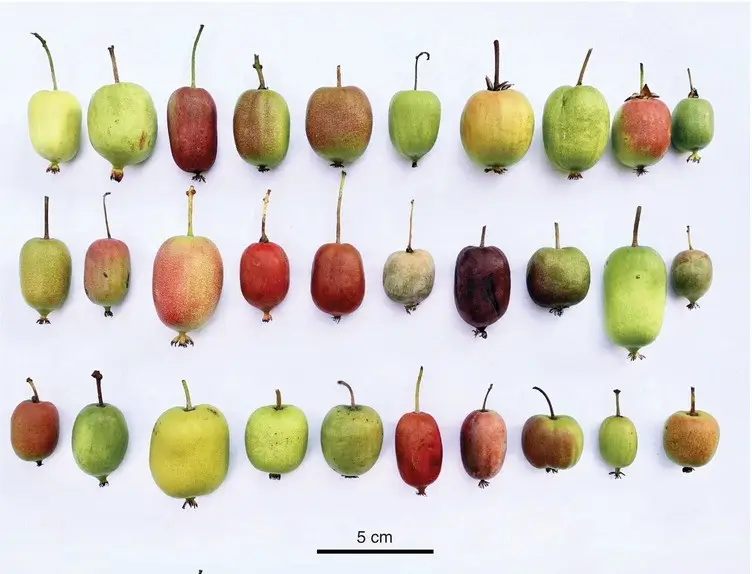
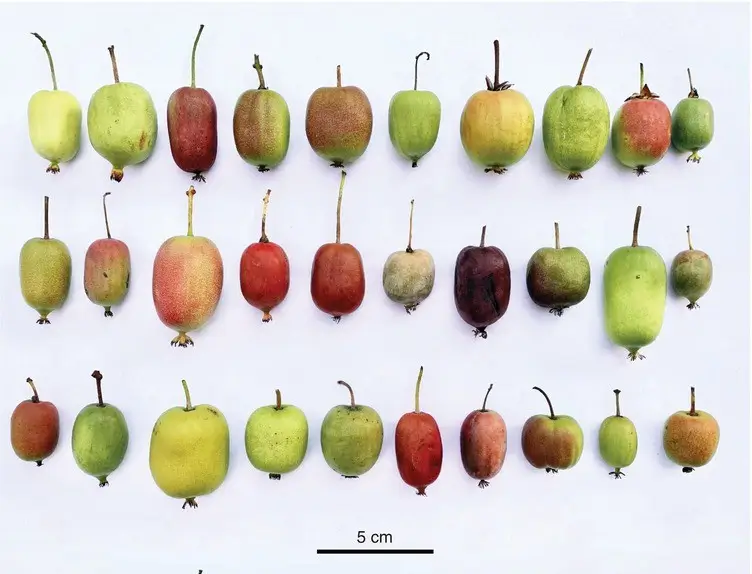
Mini kiwis are characterised by their small size and smooth, thin skin, which is completely hairless. As a result, they can be eaten in a single bite, without needing to be peeled or having their skin removed – skin which is packed with antioxidants and bioactive compounds.
What’s more, when you pop a ripe mini kiwi into your mouth, it’s a real burst of flavour that leaves no one indifferent, thanks to its sweetness and the unique nuances each variety offers, making this fruit a true delicacy.
And as if that weren’t enough, the mini kiwi is considered one of the most nutrient-dense and healthy fruits in the world, boasting a unique concentration of antioxidants, minerals and vitamins.
If you’d like to try these delicious fruits, at Arándanos el Cierrón we produce organic mini kiwis; the fruit we harvest in August and September is shipped throughout Spain and can be purchased directly on our website
Do you have to peel mini kiwis?
No, not at all; you don’t need to peel mini kiwis or remove their skin before eating them, just like most soft fruits and unlike their larger cousin, the green kiwi.
When we talk about mini kiwis, kiwino or kiwiberry in English, we are always referring to fruits with a skin that is completely thin and smooth, which is practically imperceptible to the palate and therefore does not need to be peeled. For those who cannot tolerate this thin skin, they may suck or slurp the delicious pulp from the inside; however, they will be missing out on all the antioxidants found in the skin of the mini kiwi, considered the most nutrient-dense fruit amongst the 27 most widely consumed worldwide.
Do all mini kiwis have smooth, hairless skin?
Yes, whenever we talk about mini kiwis or kiwiños, we are referring to small kiwis, as the name suggests, whose skin is completely thin and smooth.
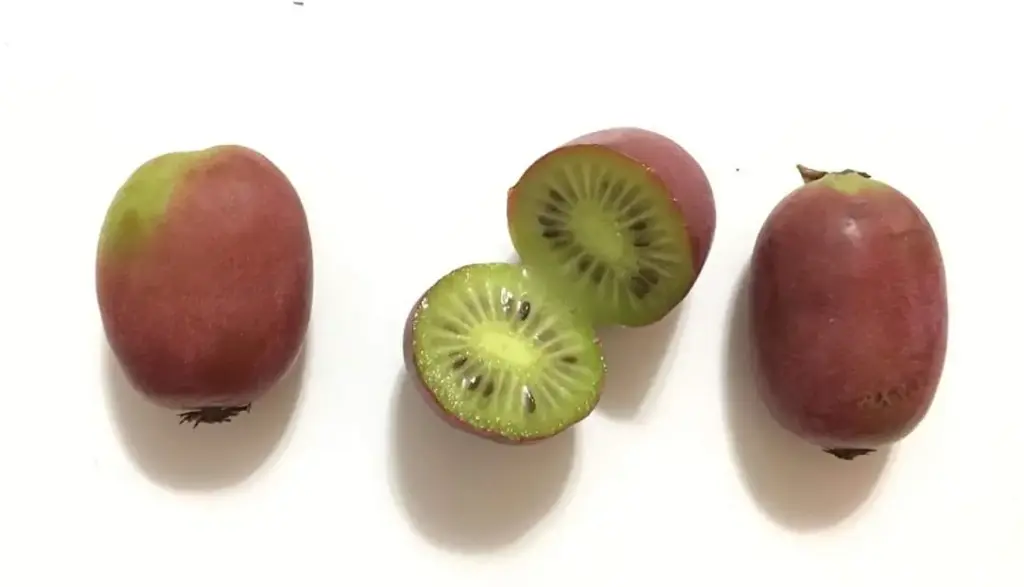
And although all mini kiwis are similar in this respect, there is a wide range of varieties derived from different species, the most important being the species Actinidia arguta, from which most commercial varieties have been developed. Some of the best-known include Ananasnaya, Geneva or Bingo and, of course, the ‘self-fertile’ varieties such as Vitikiwi or Issai, which are the most commonly grown in our orchards and gardens.
Another species of some significance is Actinidia kolomikta, whose plants are known worldwide as “Arctic Beauty” and are characterised by producing very elongated fruits.
Other species of lesser importance include Actinidia melanandra, from which some varieties with very striking colours have been developed, such as the purple-coloured Ken’s Red; and the species Actinidia polygama, whose fruits are used almost exclusively in the pharmaceutical industry.
What is the difference between the skin of a kiwi and a kiwiño?
Whilst the skin of the green kiwi (Actinia deliciosa) is peeled because it has hairs or fuzz and is very thick and coarse to the palate, the skin of the kiwiño (A. arguta) is completely smooth, thin and utterly hairless, allowing us to eat it along with the flesh and benefit from all its properties thanks to its high concentration of antioxidants, minerals and vitamins.
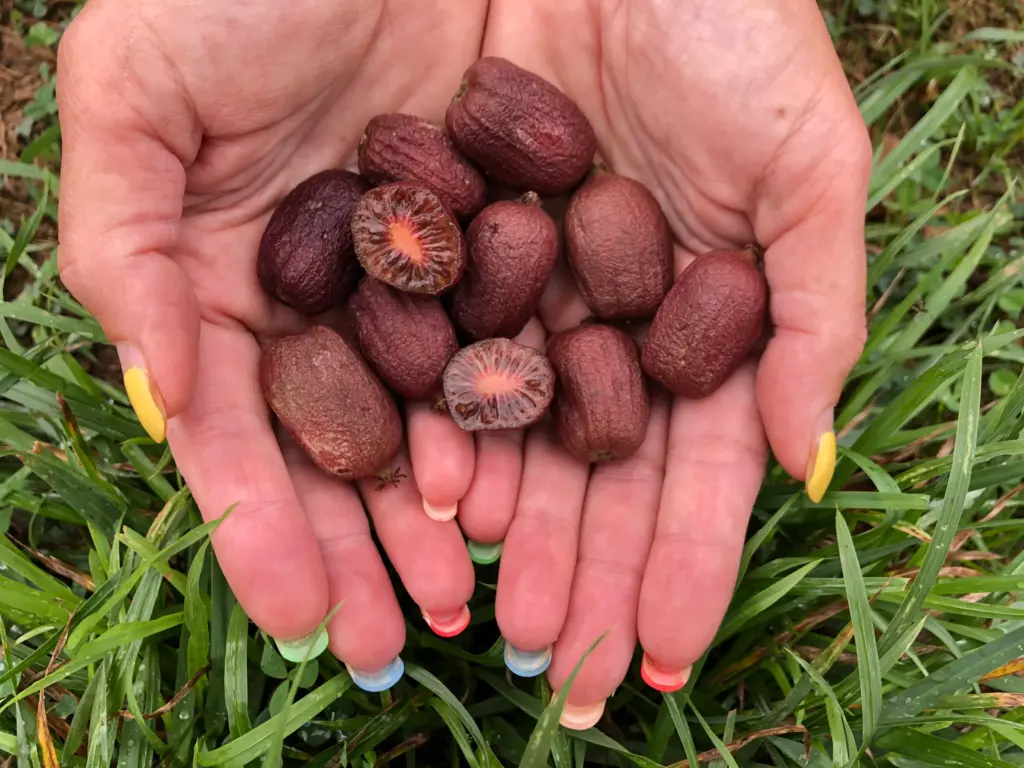
And what about the yellow kiwi? Although the yellow kiwi or golden kiwi (A. chinensis) has a sweeter flavour than the green kiwi and a skin with fewer hairs, this skin is still coarse and rough to eat and, therefore, we will have to remove it, unlike the mini kiwis or kiwiños, which we can eat straight away with skin and flesh.
How big are mini kiwis?
Mini kiwis are characterised by their small size, similar to a grape. Their size can vary depending on the different varieties, ranging from 2 to 30 grams, with the varieties known as ‘Jumbo’ reaching the latter weight; these do lose some of the charm of the mini kiwi, but each to their own.
Furthermore, thanks to their small size, they can be eaten in a single bite, almost like a snack or appetiser.
Whether you want to try these fruits or grow these plants in your vegetable patch or garden, at Arándanos el Cierrón we have the widest range of mini kiwis and kiwi plants, which you can purchase on our website
Prepared and written by Adrián García Villar, Agricultural Engineer from the Polytechnic University of Madrid (UPM). Membership No. 215, Official Association of Agricultural Engineers of the Principality of Asturias (COIASTUR)
Other links of interest:
References consulted:
Filip Debersaques, Piotr Latocha, Jonas Decorte, (2019).
Juan Carlos García, Guillermo García González de Lena, (2010).