
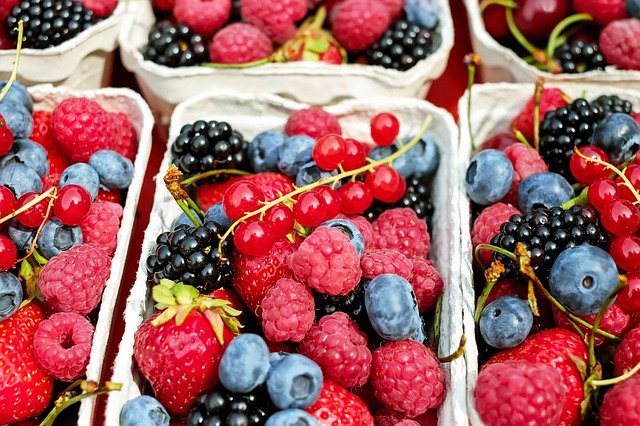
Anthocyanins are a group of water-soluble plant pigments found in vegetables and fruit; in many cases, they are responsible for their colour. Anthocyanins are believed to have anti-inflammatory, anti-cancer and antioxidant properties.
In the case of red fruits or berries, they usually give a violet, blue or red colour, the most common being pelargonidin, petunidin, delphinidin, malvidin and cyanidin; the latter being the most abundant in blueberries and responsible for their characteristic violet colour.
It is very important to know how to store our blueberries or red berries correctly, as exposure to high temperatures or excessive oxygen can cause them to degrade and lose their anthocyanin content. Furthermore, pH plays a fundamental role in the stability of anthocyanins, which is why it is much better to eat blueberries or berries between meals, as high exposure to acidic pH in the gastrointestinal tract (usually when we eat a lot) can affect their absorption and availability.
Prepared and written by Adrián García Villar, Agricultural Engineer from the Polytechnic University of Madrid (UPM). Membership No. 215, Official Association of Agricultural Engineers of the Principality of Asturias (COIASTUR).
References:
Jim Fang PhD (2015).
Miguel Aguilera Ortíz et al. Functional properties of anthocyanins. Faculty of Chemical Sciences, Juárez University of the State of Durango.
Q.F.B. Martha Laura Cervantes Ceja (2009).